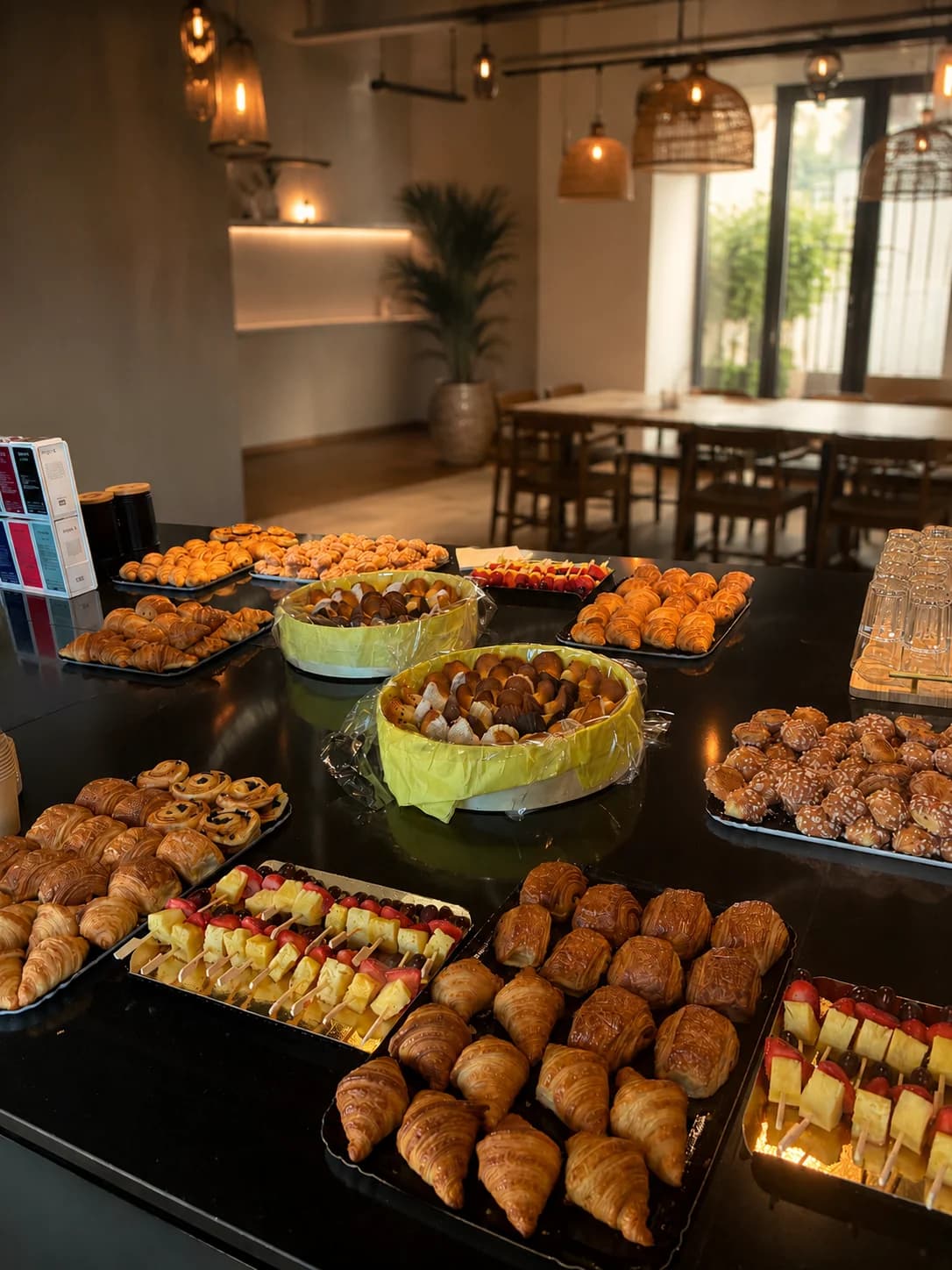
Team breakfast and productivity: what the science really says
The brain uses 20% of the body's energy. A good breakfast before a strategy meeting is not a luxury: what occupational medicine says.
There is a widespread belief that a croissant placed on a meeting table is essentially a symbolic gesture. The neurological reality is more precise: what your colleagues eat before a meeting directly influences the quality of their decisions during that meeting. Here is what the science says, and what you can do with it in practice.
The brain, the hungriest organ in the human body
The brain accounts for 2% of body mass but uses about 20% of the body's total energy. Its main fuel is glucose, supplied by dietary carbohydrates. When fasting or after a poor-quality meal, blood glucose drops, and with it the capacity to concentrate, memorise and make decisions.
A study published in the Journal of Psychiatric Research (2013) showed that a balanced breakfast improves adults' cognitive performance by 15 to 20% on working-memory tasks in the following two hours. For an 8 am CODIR (management committee) meeting, that is a decisive window.
Fast sugars vs slow sugars: the classic morning-meeting mistake
The trap of classic meeting platters: white sandwich bread, industrial biscuits, sweetened reconstituted fruit juices. These foods cause a rapid blood-sugar spike followed by reactive hypoglycaemia 45 to 90 minutes later, precisely when the meeting is building in intensity.
A well-designed platter, on the contrary, combines:
- Complex carbohydrates (butter pastries, artisan bread), slow and steady energy release
- Protein (yoghurts, eggs, fromage blanc), lasting fullness, fewer blood-sugar spikes
- Good-quality fats (butter, nuts), stable brain energy over 2 to 3 hours
- Hydration (water, juice with no added sugar), mild dehydration of 1 to 2% is enough to reduce concentration
8 am, 9 am and 10 am meetings, particularly sensitive slots
Morning meetings are the most exposed to nutritional shortfalls. Colleagues who have been on public transport since 7 am, without eating or after a quick coffee, arrive with low blood sugar and a cortisol level that is still high. The combination brings together all the conditions for sub-optimal decision-making.
A team breakfast served 15 to 20 minutes before the meeting starts allows the time needed for blood sugar to stabilise. It is not catering, it is cognitive preparation.
What neuroscience says about shared meals
Beyond individual nutrition, a shared meal activates specific neurological mechanisms. A study from Cornell University (2015) showed that teams who eat together make better collective decisions, cooperate more effectively and report a higher level of job satisfaction than teams who do not share meals.
The underlying mechanism: a shared meal activates the trust circuits (oxytocin) and reduces internal competition. This benefit is not limited to the morning: a lunch tray shared at midday or an afternoon break produce the same regulating effect. A team breakfast before a CODIR is not a trivial ritual, it is a regulator of collective intelligence.
Artisan vs industrial: the neurological difference
An artisan all-butter croissant and an industrial margarine croissant have significantly different nutritional profiles. Butter provides short- and medium-chain saturated fatty acids that the brain metabolises better than the trans or partially hydrogenated fats found in industrial margarine. Over time, the build-up of these differences contributes to the findings of studies on diet and cognition.
L'Écrin Traiteur delivers your artisan breakfasts from 6:30 am, in Paris and Île-de-France. Order by 2 pm the day before.
Fuel the performance of your meetings, from morning to evening
The quality of what your teams eat before, during and after a meeting is not neutral: it is a cognitive performance parameter you can manage. An artisan breakfast before a CODIR, a balanced lunch tray for a seminar, an afternoon break to keep going until 6 pm, each format supports concentration at the right moment of the day. Delivery from 6:30 am in Paris and Île-de-France, reply within 24 hours: request your quote and match your formats to the real rhythm of your teams.
Frequently asked questions
Does breakfast really improve productivity at the office?
Yes, according to the available data. The brain uses 20% of the body's energy. A balanced breakfast improves cognitive performance by 15 to 20% on working-memory tasks in the following two hours (Journal of Psychiatric Research, 2013). For a CODIR (management committee) meeting or an intense working session, that is a measurable difference.
Which foods help concentration in a morning meeting?
Favour complex carbohydrates (artisan butter pastries, artisan bread), protein (yoghurts, fromage blanc) and good hydration (water, juice with no added sugar). Avoid high-glycaemic-index foods (white bread, sweet industrial biscuits), which cause a blood-sugar spike followed by an energy slump 45 to 90 minutes later.
What time should breakfast be served before a morning meeting?
15 to 20 minutes before the meeting starts is optimal to allow blood sugar to stabilise. For a 9 am meeting, breakfast at 8:40 am. For an 8 am CODIR, delivery at 7:30 to 7:45 am, breakfast served at 7:40 am.
An event in Paris or Île-de-France?
Tell us about your event and receive a tailored quote within 24 hours.
Request a quote →