Wellbeing at the office: why what we eat at work really matters
Concentration, team cohesion, employer brand: what your teams eat is a measurable HR lever. The data, and how to act without a big budget.
Ask a company head whether food is part of their HR strategy, and they will probably say no. Then ask what their teams ate at the last seminar, and you will see they remember it precisely. That is the whole paradox: what is served to eat at work is treated as a logistical detail, when it is one of the signals of company culture that employees read most closely. Here is why it matters, and how to turn it into a lever.
Food and productivity: what the data says
The brain accounts for 2% of body mass but consumes about 20% of the body's energy, mainly in the form of glucose. A skipped or poor-quality meal leads to a drop in alertness, often in the early afternoon, or 45 to 90 minutes after a spike of fast sugar. Conversely, a balanced breakfast before a meeting supports concentration and working memory over the following hours. This is not a question of luxury, but of operational efficiency.
The shared meal, the quiet glue of cohesion
Eating together is one of the oldest social acts. In a company, the meal break is often the only informal moment when employees from different departments really cross paths. A well-made lunch tray, a convivial buffet, a 4 pm afternoon break: so many occasions that spark the cross-team conversations no formal meeting produces. These informal exchanges build horizontal trust, one of the least measured, but most decisive, dimensions of wellbeing at work.
Food as a management signal
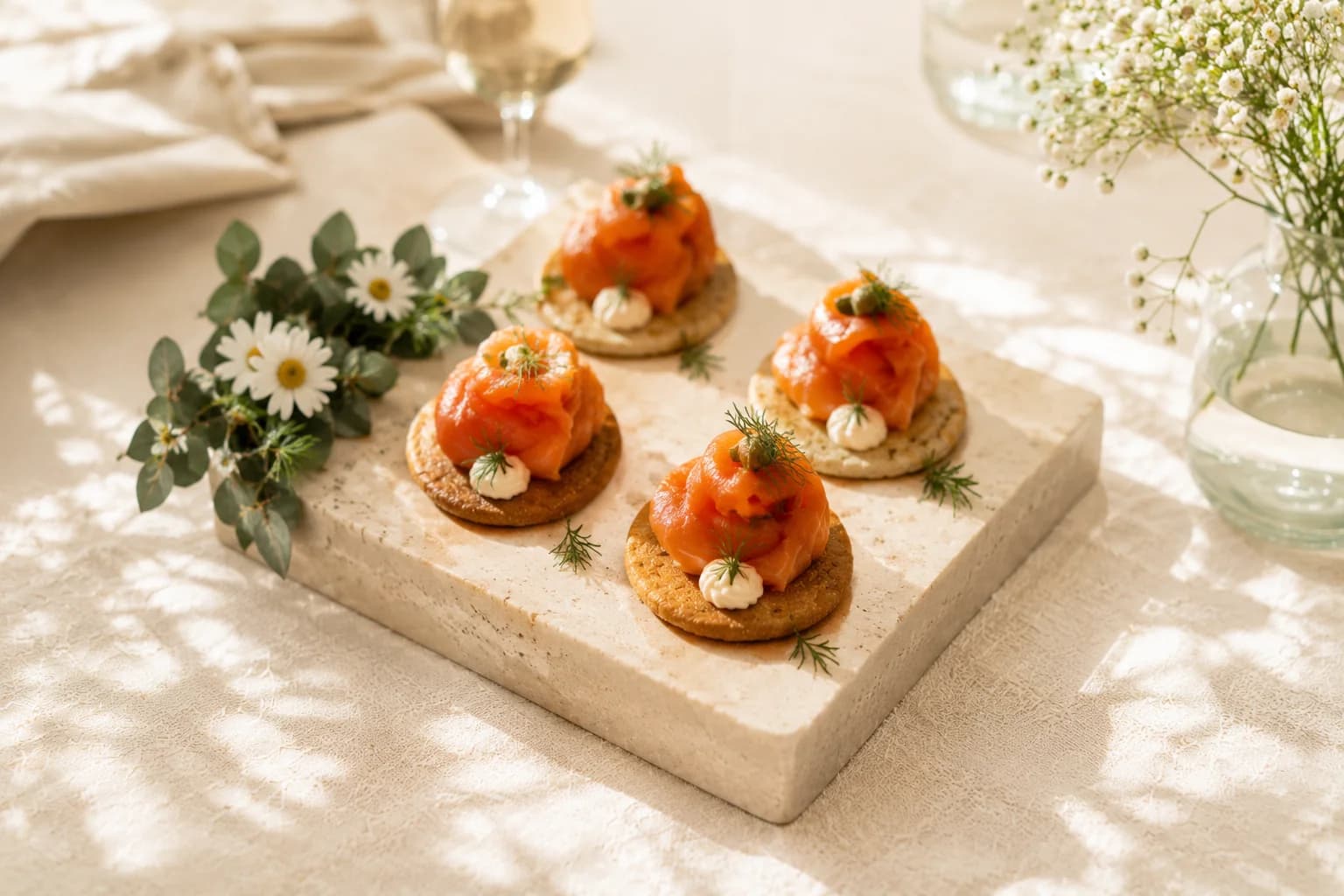
What a company offers to eat is a strong signal, and often an unconscious one. Artisan pastries on the morning of an important meeting say: we thought of you, this moment matters. A packet of industrial biscuits says the opposite. This signal is decoded especially by two profiles: new hires, who form their image of the company in their first weeks, and experienced staff, who have the references to judge the real effort. In a market where employer attractiveness is strategic, this attention becomes a differentiating factor.
Towards a company food policy
More and more companies in Île-de-France are formalising an approach: a regular caterer for internal events, a dedicated budget for quality breaks, a choice of identified artisans they can name in their internal communication or their workplace wellbeing (QCVT) reporting. It is not reserved for large groups: an SME of 20 people can set up a real ritual, a monthly breakfast, a weekly break, on a controlled budget. What matters is regularity and consistency, more than spending.
The idea fits in one sentence: what we eat together at the office builds, day after day, the company we want to be. To structure your approach, request a quote: we put together formats suited to your headcount, your rhythm and your artisans, in Paris and Île-de-France.
This autumn of 2026, more and more companies are including a budget line dedicated to food at the office in their annual workplace wellbeing (QVT) policy, a trend that is confirmed year after year.
Frequently asked questions
Does food at work really have an impact on productivity?
Yes. The brain consumes about 20% of the body's energy, mainly in the form of glucose. A poor-quality meal leads to a drop in alertness, while a balanced breakfast supports concentration and working memory over the following hours. It is a matter of efficiency, not comfort.
Do you need a big budget for a company food policy?
No. An SME of 20 people can set up a regular ritual (a monthly breakfast, a weekly quality break) on a controlled budget, often lower than that of other team-building initiatives. Regularity and consistency matter more than the amount.
How can food be built into a workplace wellbeing (QVCT) or CSR approach?
Choose identified artisans you can name, document your choices (origin, certifications) and set up regular collective food rituals. These elements make relevant content for a social report, a CSR report or an internal workplace wellbeing (QVCT) survey.
An event in Paris or Île-de-France?
Tell us about your event and receive a tailored quote within 24 hours.
Request a quote →